Foreword
As a novice of stocks and trading, you will require a lot of study and practice to have a truly fulfilling experience. The learning process that comes with the financial markets can be more difficult in the high-stakes environment of the world of finance. For this reason, it is a smart move to learn about the market prior to investing real capital. Fortunately, this is possible by paper trading. Paper trading is an effective simulation tool that aspiring investors can use to practice their skills without the fear of losing real money. This practice allows for proper exploratory experimentation with various strategies while understanding market dynamics and easing into the trading environment. We will explore the topic of paper trading, why it is beneficial, how it operates, and some of its many positive and negative factors.
What is Paper Trading?
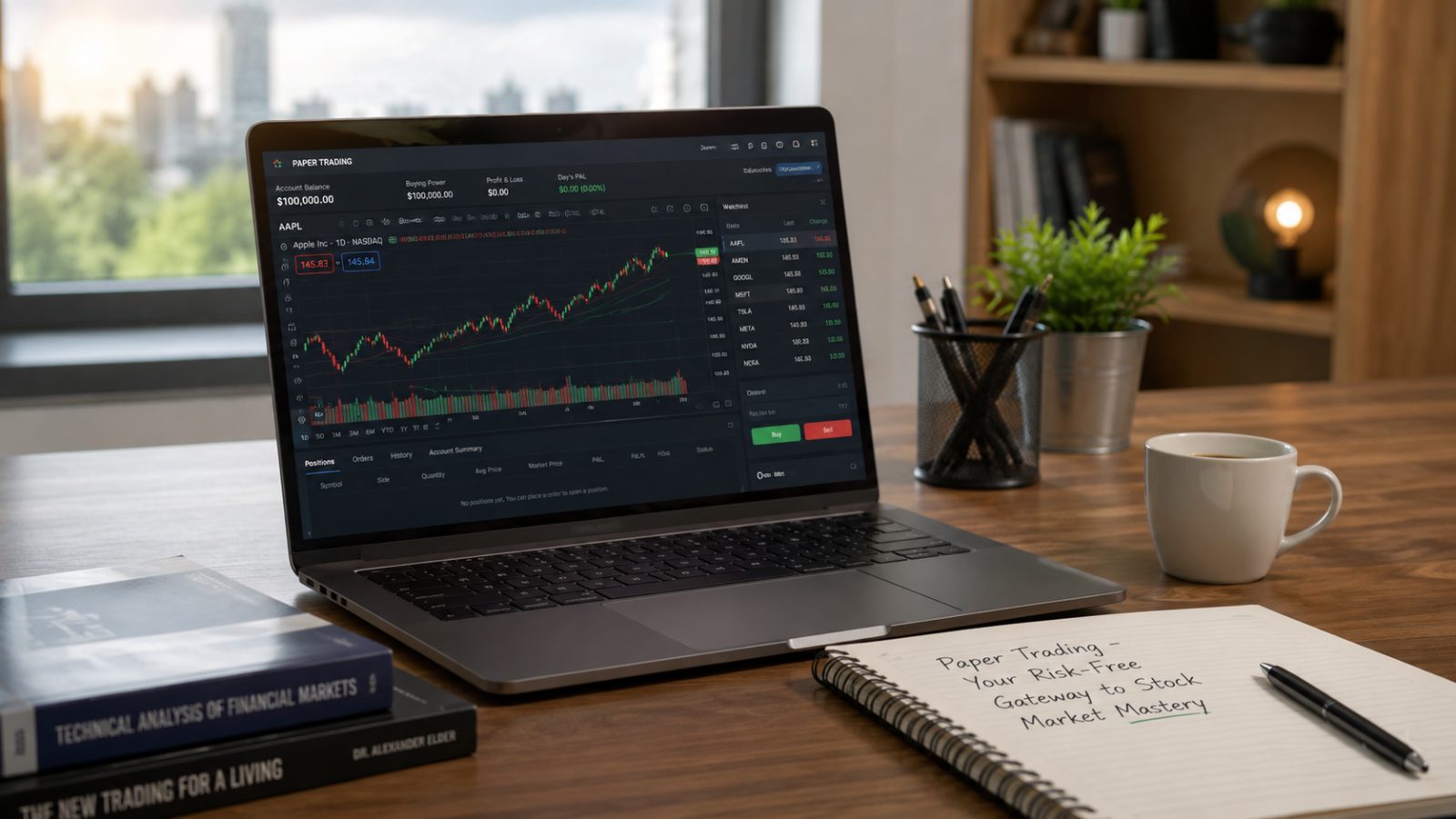
Paper trading is a type of simulation that allows people to practice buying and selling assets without putting any real money at risk. It is a fantastic opportunity to test out new strategies, experience market activity firsthand, and practice with trading interfaces under the control of paper trading.
Lots of brokerage firms have a virtual trading platform, or paper trading interface, to use alongside their real trading platform, while others set up a paper trading platform as a separate thing,such as stock simulator games. If you are in a live trading account, you may have the option to switch to a virtual trading mode. It is common for your paper trading account and market data subscription to be affiliated with your live account, which can be in the form of a mirror for account balance, requiring a registration for both accounts. In general, you are given a set amount of simulated cash to start with, and in the same way a real money trading account would experience gains and losses, your value will go up and down based on performance or paper profits and losses.
Importance of Paper Stock Trading
Paper trading is important for both new and experienced traders. Here are the reasons why:
Risk-Free Practice: It enables investors to practice buying and selling securities without the risk of actual money. You can try things, make mistakes, and learn without facing any financial repercussions.
Platform Familiarization: Paper trades help beginners learn how to navigate a trading platform, understand the different types of orders and trades, and complete the deal.
Strategy Testing: It provides the opportunity to test out new investment strategies without the risk of a live account. This gives you the chance to improve your strategy and also see if there are any issues with your analytical process.
Market Dynamics: Paper trading makes it possible to learn how market dynamics and price movement works in real-time so you can understand the market when you trade for real.
How Does Paper Trading Work?
Paper trading allows new investors and traders to understand the basic trading principle by practicing the buying and selling of stocks simulated without the risk of real money. It can be referred to in comparison to a "simulation trading" type of exercise conducted completely in a virtual account.
Similar to real investments, where you must use trading practices for specific investment pursuit and risk appetite, a paper trader should also practice their trading strategies similar to their simulated investment and risk tolerance. A new trader can use this virtual environment to become accustomed to stock market practices, various strategies, analytical tools and platform mechanics. The role of the simulated environment is to create as close to a live trading experience as possible with the addition of discipline training and development before real capital is at risk.
Benefits of Paper Trading
There are definite benefits of practicing through paper trading:
Free Learning: Also called demo trading, it is free by nature. There is no way you can lose money because of a wrong entry or an unlucky time. It lets you focus purely on obtaining a specific trading advantage.
Experience: It provides the user with experience in every part of the process. You learn to do pre-market planning. You develop the ability to estimate ultimate profit or loss, and you practice with trading software while learning what will or will not work in a very casual way. You also grasp that all activities involve no risk of losing money.
Statistical Understanding: After you spent a few weeks trading the report, you will have created some useful statistics around your trading performance. This will allow you to have a better sense of new trading strategies and market approaches based on your own statistics.
Emotion Removal (for practice): Trading can invoke strong emotions like greed and fear—both of which can cloud important information needed to manage risk. A paper trade gives you an opportunity to put aside the emotional roller coaster of the trip and focus more on the analytical and mathematical method, instead of being clouded by the incident of psychology.
Confidence: After a few months of making real profits executing simulated trade decisions, most novices explain feeling more confident and realizing they are ready to transition into a new phase of trading. They can begin to institute the same trading approaches and strategies that they were successful in generating simulated profits.
Advantages and Disadvantages of Paper Trading
Paper Trades Vs. Live Trading: A Crucial Distinction
Engaging in paper trading can occasionally create a false sense of security and lead to distorted investment returns. This "nonconformance" with the natural market occurs since there is no risk of real capital. It also serves as an ideal situation for fundamental strategies like "buy low and sell high." In the real world, fundamentals may define directional moves more cleanly; however, it is often difficult to remain disciplined with emotions and other factors complicating decision-making. Paper trading provides a much easier environment to accomplish the foreign exchange strategy of "buying low and selling high."
The greatest difference is human psychology: the risk of real money means some investors or traders feel a myriad of different emotions and exhibit different behaviors when managing a live account. A rookie foreign exchange trader might open a long position in the Euro against the US Dollar just prior to nonfarm payroll numbers being announced. If the number is much better than expected, the Euro could sell off quickly, prompting the rookie trader to "double down" on the paper trade. This decision would seem like a sound one in simulation but could be tremendously dangerous, if not irrational, in a real deal governed by mindful risk management.
Final Point
The practice of paper trading is an essential tool for mastering the basics of the stock market, sharpening your skills, and testing out techniques before risking your money. It offers a safe environment in which to simulate stock trading using real market data, with a wealth of resources from beginner education to advanced charting tools. Although paper trading cannot perfectly replicate the pressures of live trading emotionally, it is a vital step in developing technical skill and the discipline needed for success.Make use of this tool and practice, learn and get yourself ready for the great opportunities of the live market.
Frequently Asked Questions (FAQ)
1. What does “paper trading” mean? Paper trading is an imitation method of trading that allows a user to buy and sell an asset without trading actual money. This is a great opportunity to test out new strategies, learn about market dynamics, and learn about trading platforms without the risk of losing actual funds.
2. Why should you use paper trading apps? Basically, paper trading apps allow a user to be an active trader in a simulated way without the risk of actual financial losses. Paper trading apps cater to a variety of different investors or traders from newbies looking to learn how the market works to experienced traders trying out a new strategy or offering anyone the opportunity to practice in a no-risk environment.
3. Are paper trading apps free? Most are, yes. Many apps like Upstox Pro, Zerodha, and TradingView all offer simulated trading for free. Some may require extra subscriptions for advanced features such as premium charts or technical indicators.
4. How accurate are paper trading apps? Papertrading apps accurately simulate market conditions with real-time data to execute a trading strategy. They don't replicate the strong emotions and psychological stress when trading actual capital.They are still valuable for practicing strategies, as well as becoming familiar with the platform. However, they do not completely factor in the human influence on expected outcomes when trading real capital.
5. Is it possible to paper trade on mobile applications? Yes, again, most mobile apps of platforms that support paper trading (like 5Paisa, Zerodha, Upstox) have apps for paper trading. This means you can practice trading while you are on the go, typically with the same features as their desktop offering.
6. How do I begin paper trading on an app? To begin trading paper, you typically want to:
1. Download the app or visit the site of the platform.
2. Sign up for a virtual or demo account.
3. Receive your virtual capital.
4. Explore the platform, research stocks/instruments, and facilitate your first simulated trades.